CIBC Agile CoE Sharepoint
Transforming the business agility site to Agile COE hub
type
Website Design
TEAM
1 UX Designer & Agile Team
TIMELINE
Aug 2025 - April 2026
Stage
Shipped
OVERVIEW
This project focused on revamping the Business Agility SharePoint site into the Agile Centre of Enablement (CoE) Hub. The original site contained valuable resources, learning paths, and tools, but the experience felt outdated, cluttered, and difficult to navigate. Content was spread across multiple pages with unclear structure and inconsistent naming.
The goal was to restructure the site into a centralized hub that is easier to navigate, clearer to understand, and aligned with both user needs and CIBC standards.
Due to NDA constraints, specific visuals and internal details are limited.
Role
Led content audit, heuristic evaluation, and comparative analysis to identify usability and IA issues
Redesigned site structure and layouts in SharePoint, focusing on navigation, content clarity, and usability
Iterated on designs through A/B testing, stakeholder feedback, and usability testing
The Problem
Too much content, not enough structure
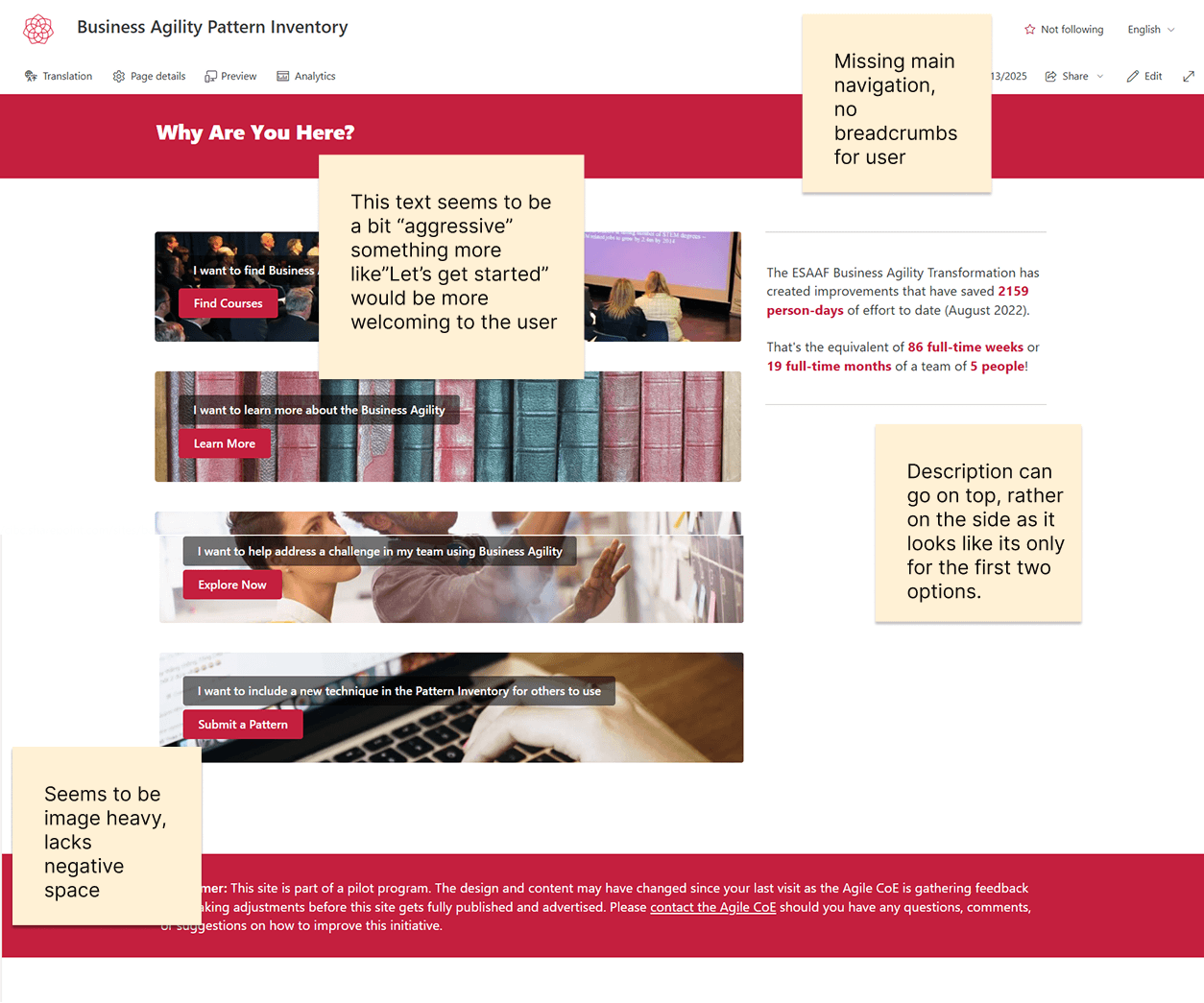
Finding information was a significant challenge as the site lacked a global navigation system, effectively stripping users of a clear starting point or path back. Without breadcrumbs or a consistent hierarchy, users were forced into a 'trial and error' search process. This frustration was compounded by outdated content duplication and an over-reliance on dense, overwhelming video blocks.
Process
Iterated page-by-page, balancing business and user needs
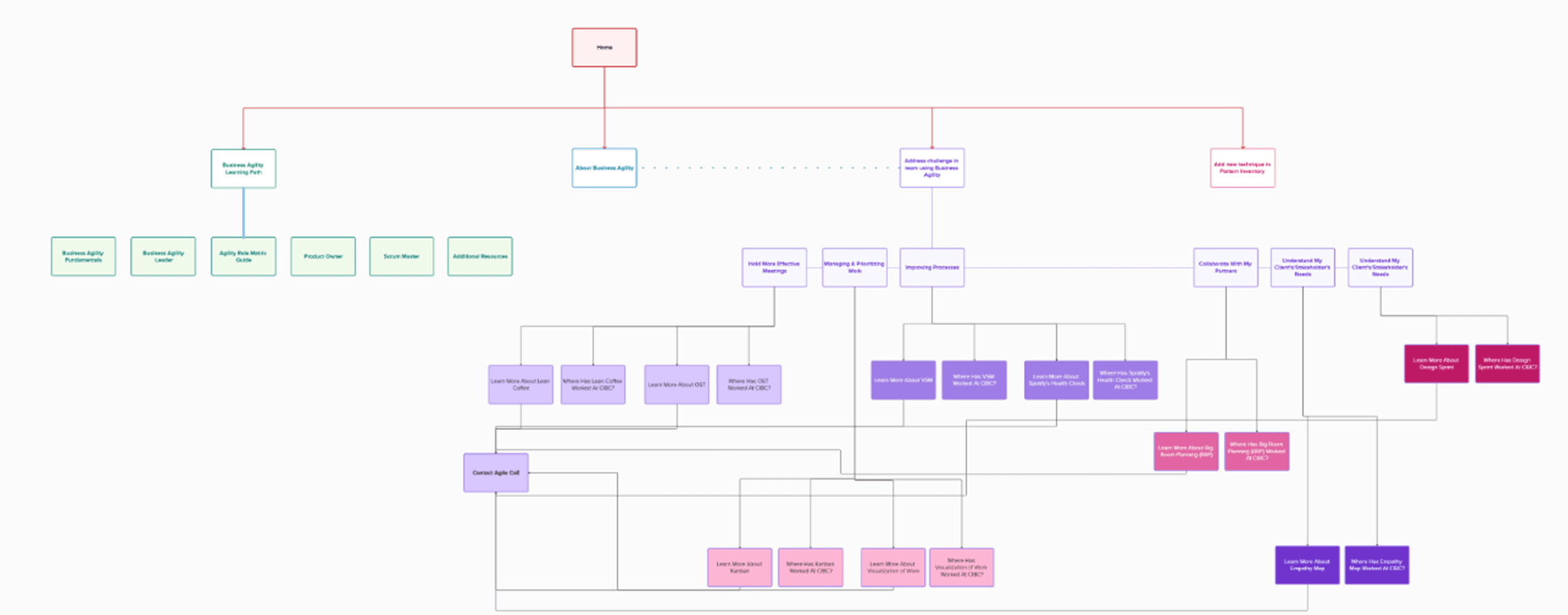
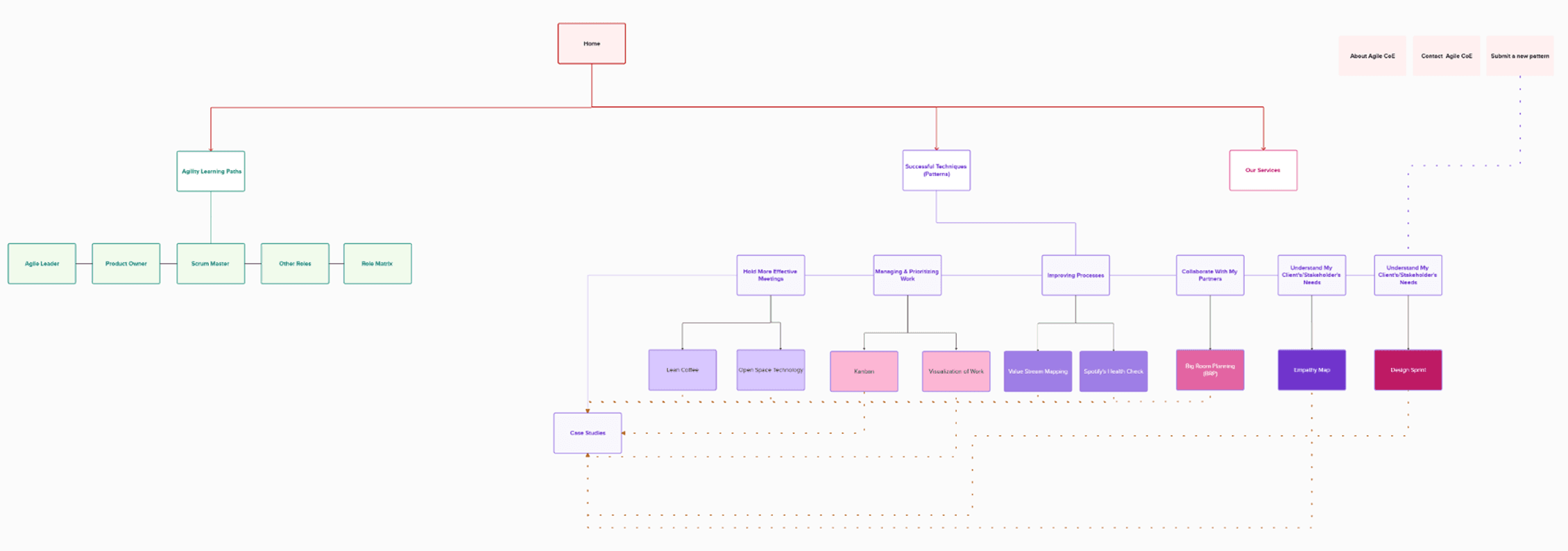
I began with a heuristic evaluation, content audit, and comparative analysis to identify critical usability issues and successful design patterns. By mapping the existing sitemap, I gained a comprehensive view of content relationships, which allowed me to strip away redundancies and restructure the information architecture.
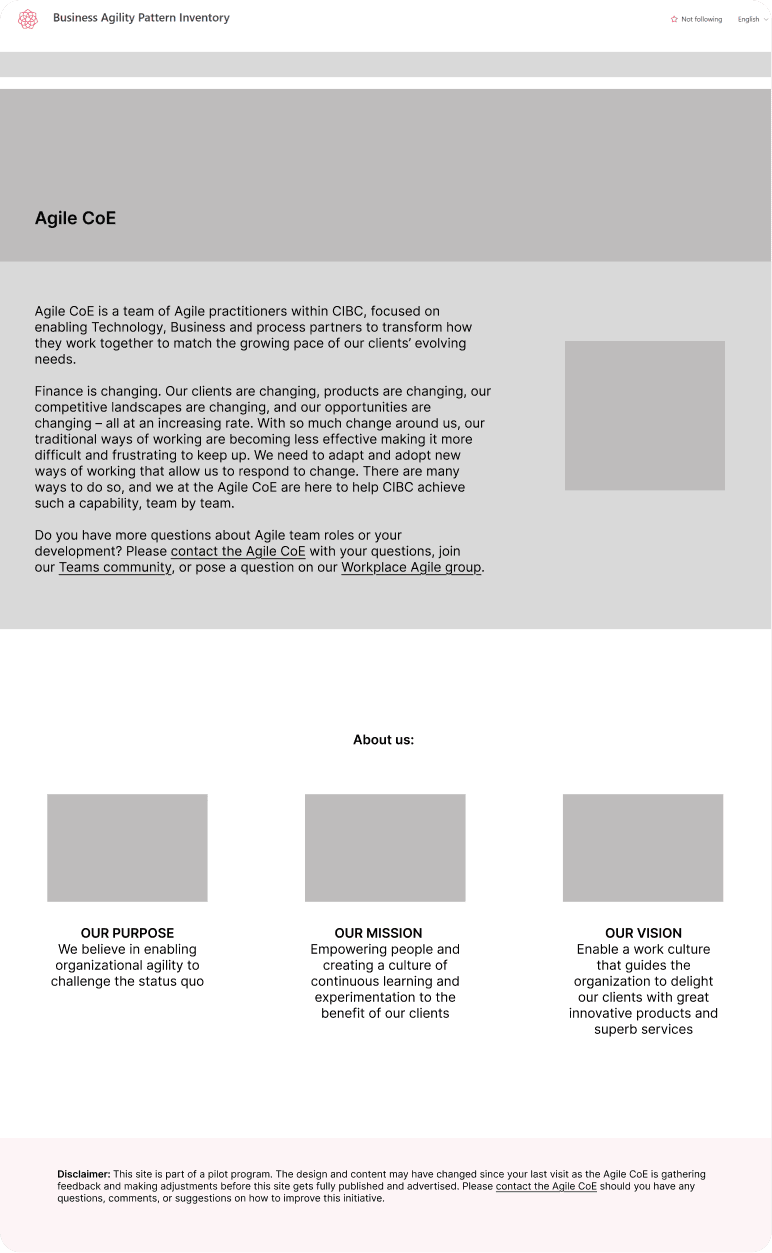
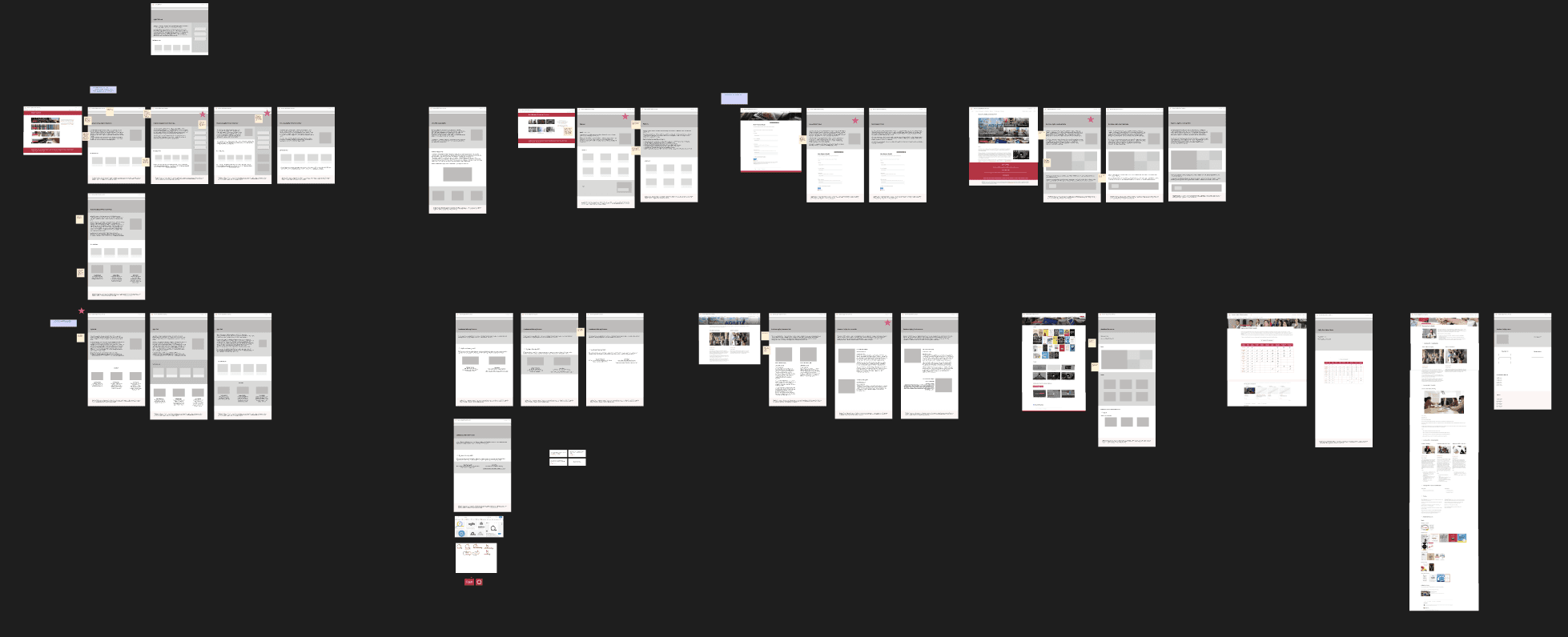
I then moved into wireframing in Figma and rapid prototyping directly within SharePoint to test various layout approaches. To validate my decisions, I conducted A/B testing on navigation styles and content structures, ensuring the final designs were truly intuitive. At the end, I tested the final designs with some first-time users.
Research - Heuristic evaluation
Without a global navigation, the site failed
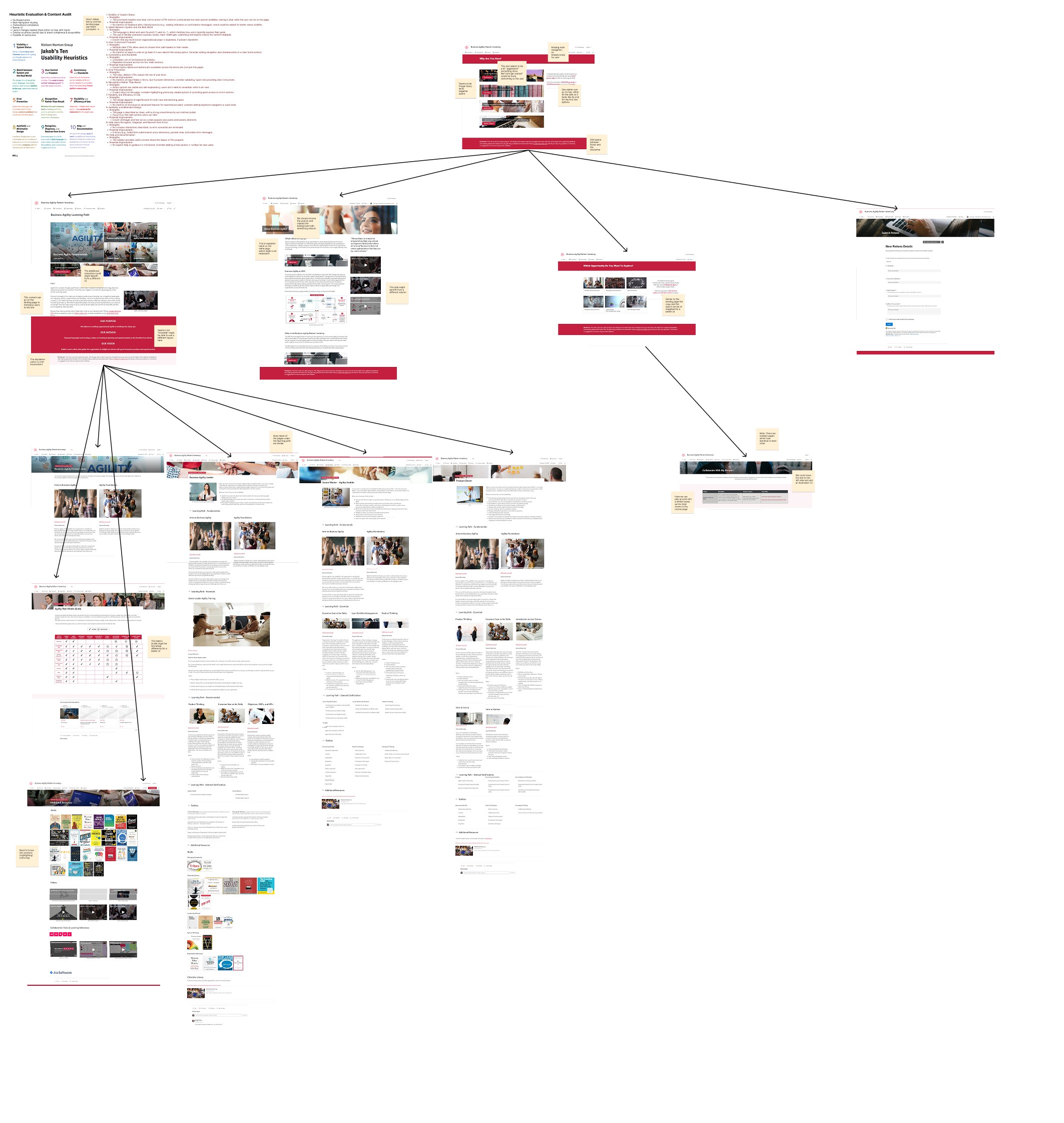
I performed a comprehensive heuristic evaluation and content audit to pinpoint the site's structural gaps and usability friction. The analysis revealed that the absence of a global navigation and breadcrumbs, paired with crowded layouts, left users without clear wayfinding or logical entry points.
These structural issues, compounded by inconsistent UI patterns across pages, often forced users to rely on manual exploration rather than an intuitive path to their goals.
Research - Competitive Analysis
Seeing what is working well currently
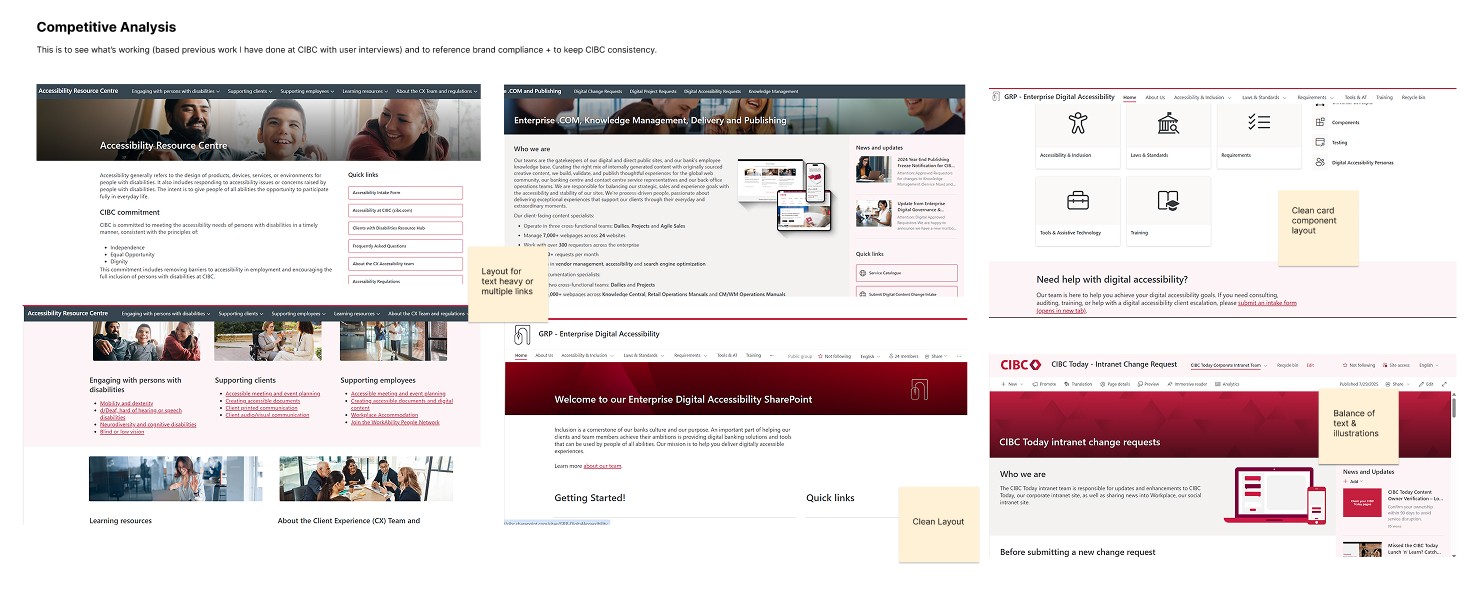
To inform the redesign, I conducted a comparative analysis of existing CIBC internal platforms to identify proven layouts and successful user patterns. By benchmarking these sites, I established a design framework that prioritized clean, card-based components and a better visual-to-text balance.
Research - Information Architecture
Clear structure starts with removing what doesn’t belong
I worked closely with stakeholders to review existing content and identify what was outdated, duplicated, or no longer relevant. Through these conversations, we aligned on what should be kept, updated, or removed, ensuring the site reflects current needs and priorities. This helped reduce unnecessary content and allowed the information architecture to focus on clear, task-based pathways that are easier for users to navigate.
Wireframing / Prototyping
Tested layouts to see what actually worked
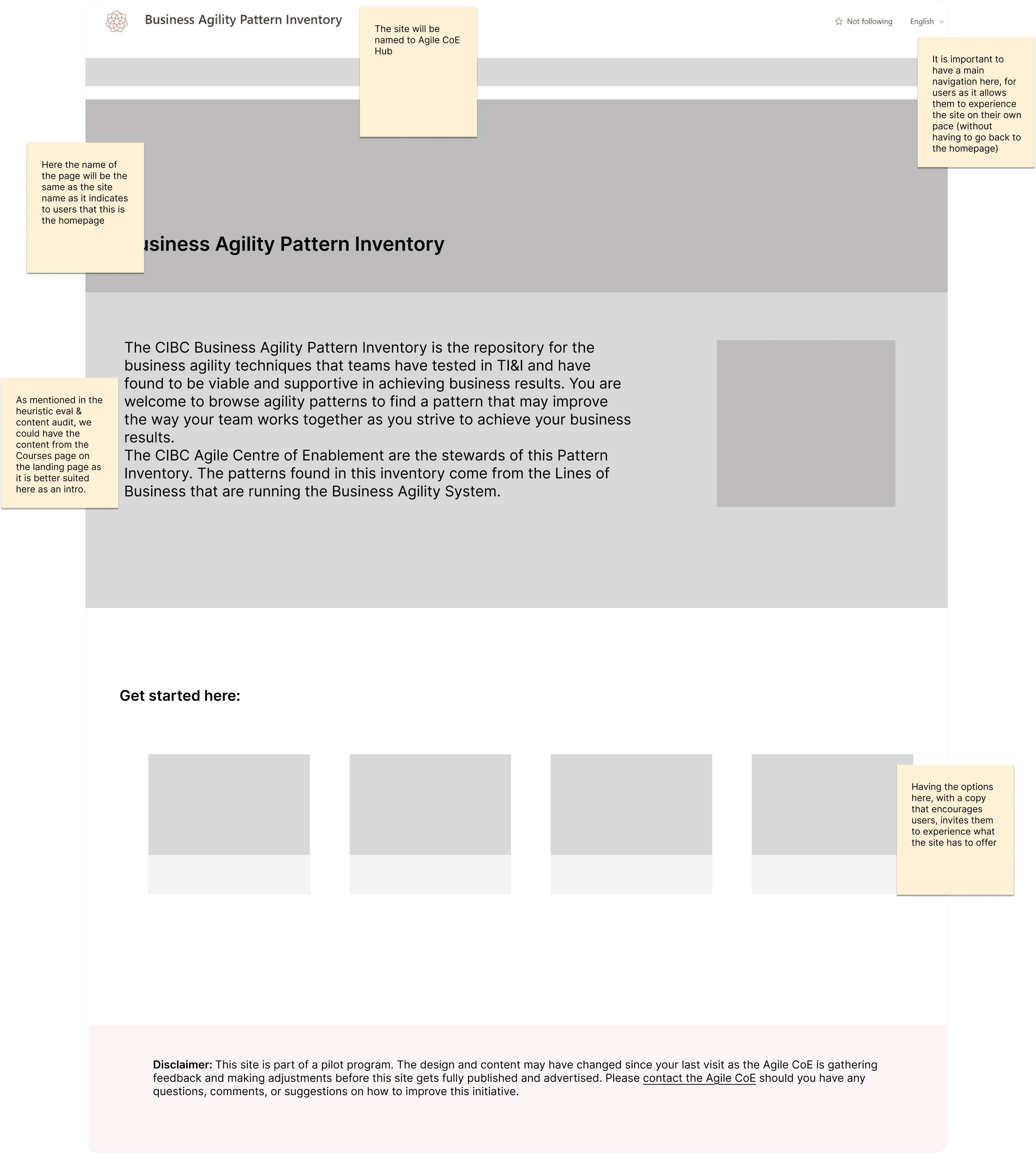
I conducted A/B testing to evaluate various navigation styles, content formats, and layout structures, specifically comparing grid versus list views and open versus collapsible sections. The findings showed a clear user preference for clean, card-based layouts and simplified navigation pathways.
By combining these results with insights from usability testing and stakeholder reviews, I refined the layouts and content to ensure the final experience was both intuitive and highly functional.
Final Design
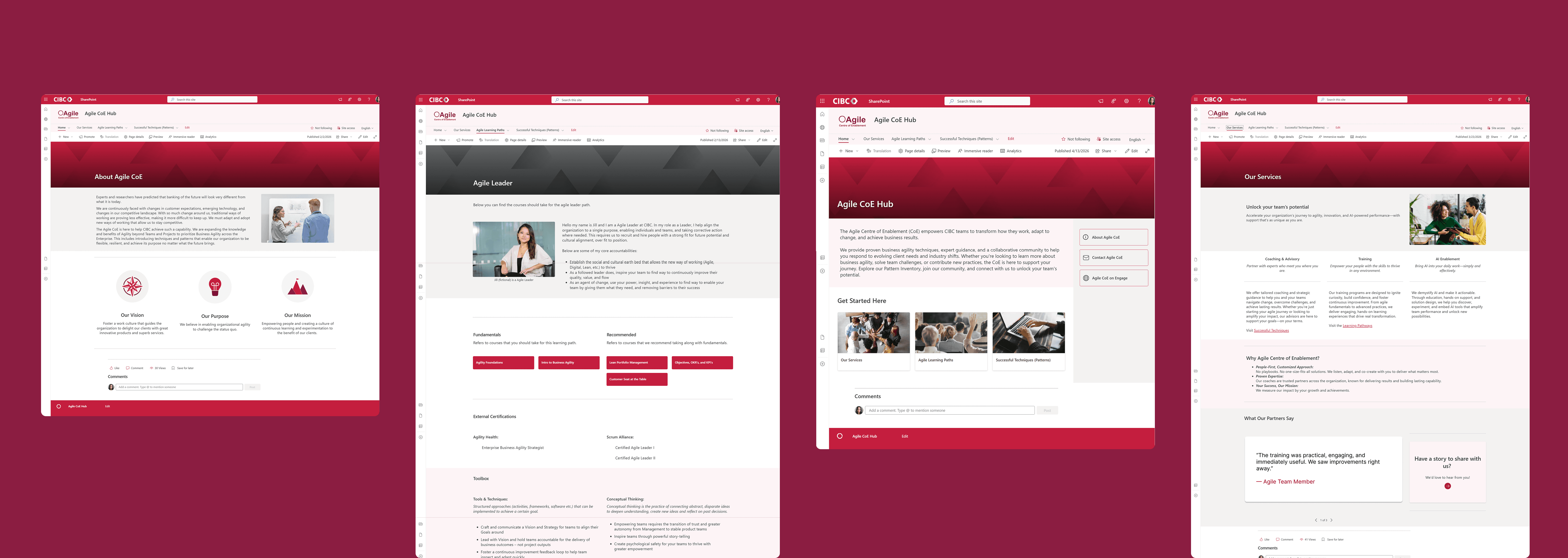
A new usable hub for internal teams
The redesigned hub significantly improves how users access and navigate Agile resources, allowing them to find relevant content faster and with far less confusion. By establishing a more logical information architecture, through research and stakeholder reviews, I created a scalable structure that easily accommodates future updates and content additions. Ultimately, the new experience ensures full alignment with internal standards and exceeds baseline usability expectations for a more efficient user journey.
Reflection
Sometimes better design means removing what’s not needed
This project taught me that improving usability isn’t always about adding more, but about knowing what to take away. A large part of my work involved removing outdated, duplicated, and unnecessary content to reduce clutter and make the site easier to navigate.
My next steps would include establishing a governance model to maintain content integrity and monitoring performance through post-launch analytics. I would also conduct follow-up usability testing to identify further opportunities for refinement, ensuring the hub remains a scalable and effective resource as user needs evolve.